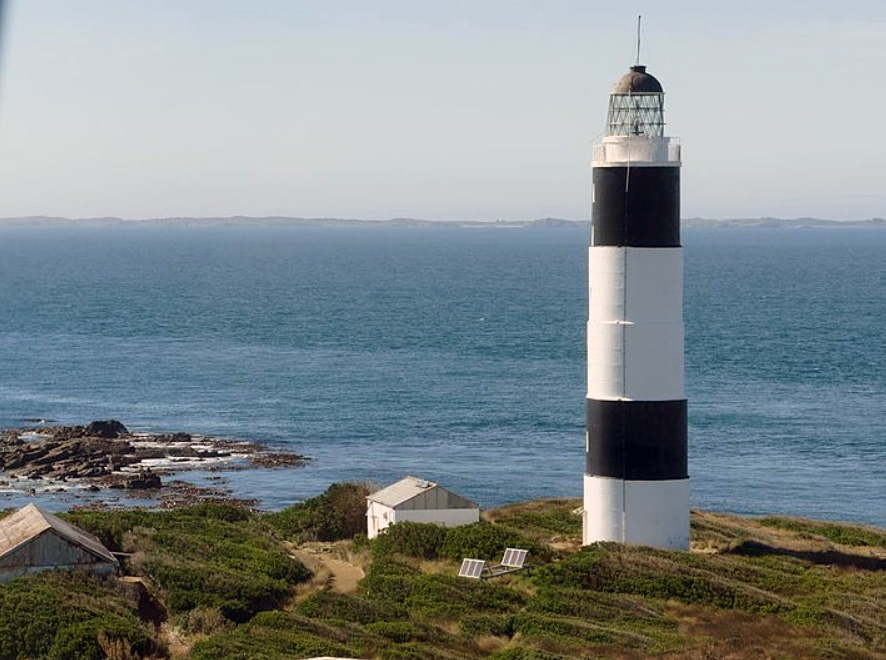
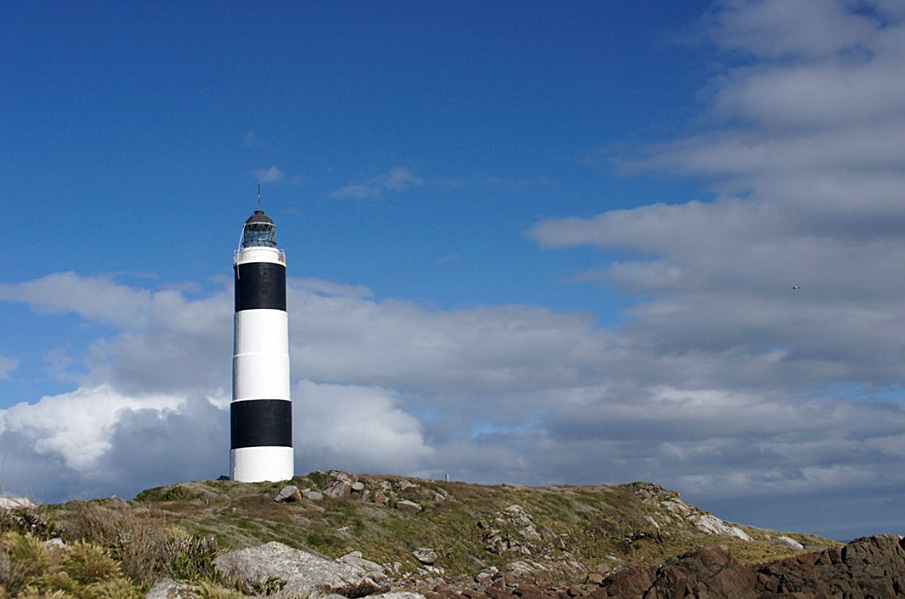
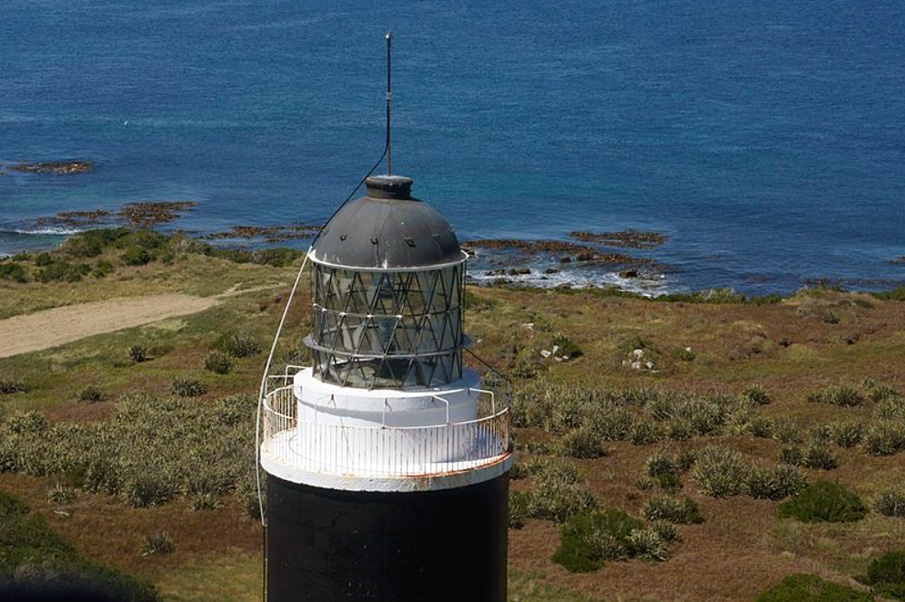
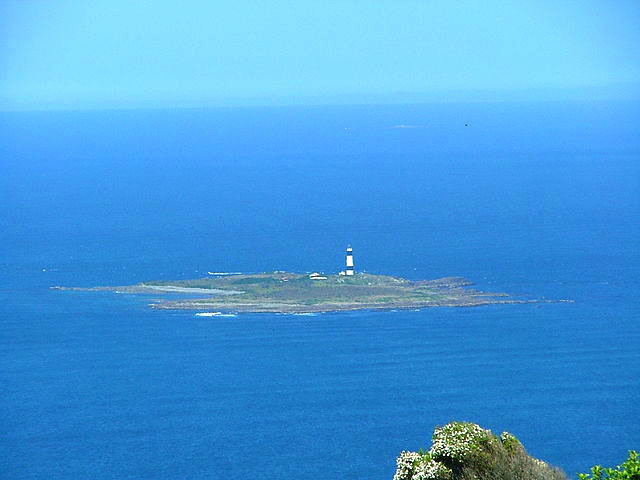
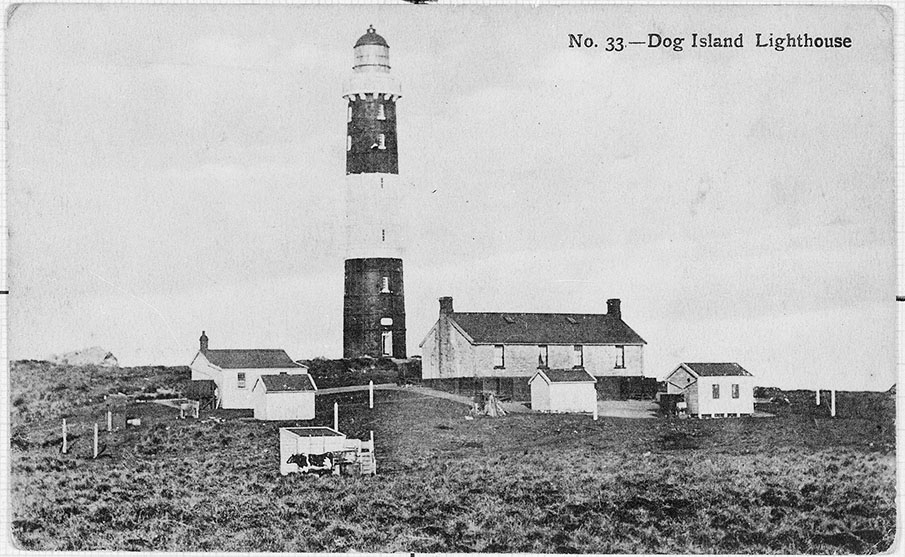
Tenders were called in February 1864, and a contract let on April 9 of that year. The lighthouse was designed by James Balfour (uncle of Robert Louis Stevenson) and built of quarried stone obtained on the island. The structure, standing over 35 metres high, has alternate black and white bands making it an impressive sight in Foveaux Strait. The walls have been strengthened on the exterior by a skin of reinforced concrete and these 1918 major structural repairs were the last made to the lighthouse.
Good maintenance over the years has ensured the survival of this historic lighthouse to effectively perform its function as a major navigational aid. As well as its age and height it is significant for its rare use of masonry in a New Zealand lighthouse and as an extant example of the work of an eminent engineer.
List Entry Information
Status
Listed
List Entry Status
Historic Place Category 1
Access
Private/No Public Access
List Number
395
Date Entered
22nd November 1984
Date of Effect
22nd November 1984
City/District Council
Invercargill City
Region
Southland Region
Legal description
Sec 1 SO 12376 (RT 4662), Southland Land District
Status
Listed
List Entry Status
Historic Place Category 1
Access
Private/No Public Access
List Number
395
Date Entered
22nd November 1984
Date of Effect
22nd November 1984
City/District Council
Invercargill City
Region
Southland Region
Legal description
Sec 1 SO 12376 (RT 4662), Southland Land District
Construction Professional
Name
Balfour, James Melville
Type
Architect
Biography
James Balfour was born and educated in Edinburgh where he subsequently entered the family business of D & T Stevenson & Co, contracting engineers to the Scottish Light(house) Service. On Stevenson & Co's recommendation Balfour was appointed to the position of Marine Engineer to the Otago Provincial Government and he arrived in New Zealand on 23 September 1863 to take up the post. In his capacity as Marine Engineer Balfour surveyed the Clutha River and the Molyneux and Waikawa harbours, designed the Otago graving dock, was a member of the Dunedin' Sanitary Commission, and reported on the proposed harbours of New Plymouth, Timaru and Wanganui. Of greater significance, however, was Balfour's contribution to the national lighthouse system. He designed the lights at Taiaroa Head (1864), Dog Island (1865), Farewell Spit (1870), Nugget Point (1870), Cape Campbell (1870), Ponui Passage (1871), Bean Rock (1872), and Cape Saunders (1880). Although the lighthouses at Taiaroa Head and Dog Island were both of masonry construction Balfour came to favour the erection of timber lighthouses as they could be built much more rapidly. Having been promoted to the position of General Government Marine Engineer, Inspector of Steamers and Superintendent of Lighthouses in October 1866, Balfour's other legacies to the country's lighthouse system were the first regulations governing the conduct of lighthouse keepers and the use of Stevenson's lanterns and optics by the Marine Department. James Balfour drowned during an official visit to Timaru harbour in December 1869 at the age of thirty-eight, but he is remembered in engineering histories as being one of a number of outstanding engineers who did so much to further the development of the colony.
Construction Details
Start Year
1865
Type
Original Construction
Construction Professional
Name
Balfour, James Melville
Type
Architect
Biography
James Balfour was born and educated in Edinburgh where he subsequently entered the family business of D & T Stevenson & Co, contracting engineers to the Scottish Light(house) Service. On Stevenson & Co's recommendation Balfour was appointed to the position of Marine Engineer to the Otago Provincial Government and he arrived in New Zealand on 23 September 1863 to take up the post. In his capacity as Marine Engineer Balfour surveyed the Clutha River and the Molyneux and Waikawa harbours, designed the Otago graving dock, was a member of the Dunedin' Sanitary Commission, and reported on the proposed harbours of New Plymouth, Timaru and Wanganui. Of greater significance, however, was Balfour's contribution to the national lighthouse system. He designed the lights at Taiaroa Head (1864), Dog Island (1865), Farewell Spit (1870), Nugget Point (1870), Cape Campbell (1870), Ponui Passage (1871), Bean Rock (1872), and Cape Saunders (1880). Although the lighthouses at Taiaroa Head and Dog Island were both of masonry construction Balfour came to favour the erection of timber lighthouses as they could be built much more rapidly. Having been promoted to the position of General Government Marine Engineer, Inspector of Steamers and Superintendent of Lighthouses in October 1866, Balfour's other legacies to the country's lighthouse system were the first regulations governing the conduct of lighthouse keepers and the use of Stevenson's lanterns and optics by the Marine Department. James Balfour drowned during an official visit to Timaru harbour in December 1869 at the age of thirty-eight, but he is remembered in engineering histories as being one of a number of outstanding engineers who did so much to further the development of the colony.
Construction Details
Start Year
1865
Type
Original Construction
Historical and Associated Iwi / Hapū / Whānau
Iwi: Ngāi Tahu
Information Sources
Brett, Henry
Henry Brett, White Wings (volume1), The Brett Printing Company Limited, 1924, Part of: New Zealand Texts Collection: http://nzetc.victoria.ac.nz/tm/scholarly/tei-Bre01Whit.html
Other Information
This place was identified as significant under previous legislation with different information requirements. It remains significant under the current legislation. There is opportunity under our legislation and policies to add to this information. Further information about this place may be available from the Otago/Southland Office of Heritage New Zealand Pouhere Taonga. Please note that entry on the New Zealand Heritage List/Rarangi Korero identifies only the heritage values of the property concerned, and should not be construed as advice on the state of the property, or as a comment of its soundness or safety, including in regard to earthquake risk, safety in the event of fire, or insanitary conditions. This historic place was registered under the Historic Places Act 1980. The following text is the original citation considered by the NZHPT Board at the time of registration. Information in square brackets indicate modifications made after the paper was considered by the NZHPT Board.
Historical and Associated Iwi / Hapū / Whānau
Iwi: Ngāi Tahu
Information Sources
Brett, Henry
Henry Brett, White Wings (volume1), The Brett Printing Company Limited, 1924, Part of: New Zealand Texts Collection: http://nzetc.victoria.ac.nz/tm/scholarly/tei-Bre01Whit.html
Other Information
This place was identified as significant under previous legislation with different information requirements. It remains significant under the current legislation. There is opportunity under our legislation and policies to add to this information. Further information about this place may be available from the Otago/Southland Office of Heritage New Zealand Pouhere Taonga. Please note that entry on the New Zealand Heritage List/Rarangi Korero identifies only the heritage values of the property concerned, and should not be construed as advice on the state of the property, or as a comment of its soundness or safety, including in regard to earthquake risk, safety in the event of fire, or insanitary conditions. This historic place was registered under the Historic Places Act 1980. The following text is the original citation considered by the NZHPT Board at the time of registration. Information in square brackets indicate modifications made after the paper was considered by the NZHPT Board.
Former Usages
General Usage: Transport
Specific Usage: Lighthouse
Web Links
description: Maritme New Zealand
Former Usages
General Usage: Transport
Specific Usage: Lighthouse
Web Links
description: Maritme New Zealand